Author Website

Advance Praise Volume I
“Rudolph Elliot Willis takes readers on an inspirational, personal journey that will both compel us to tears and encourage us to make the world a better place.”—Raj Tawney, author of Colorful Palate: A Flavorful Journey Through a Mixed American Experience
“A poignant and deeply personal account of African American migration, struggle, and resilience in post-WWII Chicago. Willis powerfully illustrates how broader social forces, such as racism, deindustrialization, and poverty, shaped the lives of families such as his, while also honoring the moments of joy, humor, and hope that persisted.”—Teresa Irene Gonzales, author of Building a Better Chicago: Race and Community Resistance to Urban Redevelopment
“Dr. Rudolph Elliot Willis puts a face on poverty in his compelling coming-of-age memoir recounting his life’s improbable path from a notorious Chicago housing project to becoming a molecular geneticist at the prestigious National Cancer Institute.”—Edmund O. Lawler, author of The Graft: How a Pioneering Operation Sparked the Modern Age of Organ Transplants
“This book is not just a memoir—it is an epistolary archival act and tribute to a mother’s love, to the bonds of family, and to the unbreakable spirit that allows us not only to survive, but to hope. Willis masterfully gathers fragments of memory, the wisdom once written to him in his mother’s lost letters, and the voices of community to create a moving record of life shaped by Chicago’s Cabrini-Green Homes. Through remembered and reimagined letters, Dr. Willis honors his mother’s unwavering support, wisdom, and sacrifices that shaped and guided his path from childhood poverty to personal and professional success.”—Jessica C. Neal, Vanguard Archives Consulting

LETTERS TO MY MOTHER:VOLUME I PREFACE
Life’s most profound lessons often emerge from the quiet exchanges between loved ones, carried on the whispers of wisdom and love that span generations. This is the essence of my life story, a narrative deeply interwoven with the gracious words and enduring resilience of my mother. Her voice, a lifeline of strength and faith, was my anchor in a world where struggle was as constant as the rising sun. Her love transcended the harsh realities of Chicago’s West and Near North Sides, shaping the man I became even amidst the shadows of adversity.
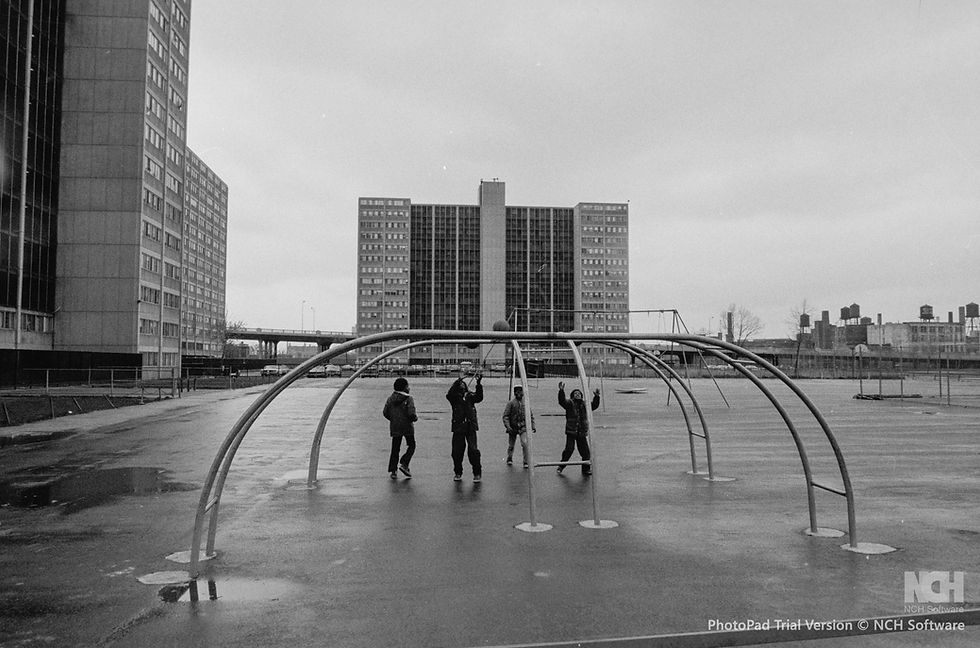
In the corridors of public housing projects like Cabrini-Green, where society’s inequalities converged with the fight for dignity, survival was an art form. These communities, carved out of economic necessity and systemic neglect, held within them stories of pain and triumph. Amid these towering concrete edifices, my family found itself clinging to the profound blessings of unity, love, and the unwavering will to persevere. For all the challenges presented by poverty and marginalization, the core of our existence was fortified by my mother’s indomitable spirit.
As a young boy, I held tight to the wisdom my mother shared, the warmth of her words, a light against the coldness of our surroundings. These words, first written to me when I became the first in my family to attend college, were lost to the chaos of life. Yet, they endure, imprinted on my heart, mind, and soul. They were my compass, guiding me through the turbulence of life in a poverty-stricken neighborhood and leading me to the hallowed halls of academia and professional success. These letters, though physically gone, form the foundation of this memoir, a testament to her love and the lessons she imparted.
Public housing projects, often conceived with hope and promise, became battlegrounds of resilience and struggle. Cabrini-Green, in particular, carried the weight of societal inequalities, its residents navigating a maze of systemic barriers that stifled opportunity. Yet, within these stark walls, the blessings of survival emerged—not in material wealth, but in the intangible treasures of love, family, and community. It was here that mothers, the steadfast heads of households, bore the brunt of life’s hardships while embodying unyielding strength and grace.
My mother’s story is a reflection of countless untold narratives of women who carried their families through storms of adversity. Her sacrifices were not always visible to the world, but they were etched into the lives she nurtured. She taught me that strength is not the absence of struggle, but the ability to rise, time and again, in the face of it. Her love was not just a feeling but a commitment, a daily act of courage and selflessness.
In her unwavering resolve, I saw the essence of integrity—a commitment to truth and accountability, even when it was difficult. In her kindness, I learned the power of small gestures and the transformative impact of compassion. And in her imperfections, I discovered the beauty of humanity, the reminder that it is not perfection but perseverance that defines us.
The stories of women like my mother, the unsung heroes of Cabrini-Green and similar communities, deserve to be told. They navigated the complexities of systemic inequality while building sanctuaries of love within their homes. These women balanced the weight of generational poverty with the hope of a better future for their children. Their journeys, often unrecognized, are testaments to the resilience and fortitude of the human spirit.
This memoir is not merely a recounting of my life; it is a tribute to her and to the countless others who have fought battles unseen by the broader world. It is an acknowledgment of the societal forces that shaped our existence and a celebration of the enduring blessings that carried us through.
As you turn the pages, you will journey into a world where struggle and hope coexist, where love triumphs amidst despair, and where the voices of those often unheard find their place in history. This is a story of resilience, faith, and the profound impact of a mother’s love. May it inspire and move you as deeply as it has shaped my life.
READERS' VOICES
I love the author’s first-person narrative style. Beautiful, eloquent, approachable, and emotional.
My kind of style. I feel connected to the author’s prose even though he’s speaking about his own
life and his own mother. There is a warmth and welcoming nature to the author’s voice and tone.
SIU REVIEWER 1
The book underscores the power of a mother’s love and how it
contributes to her son’s strength of character.
SIU REVIEWER 2
BIO

Rudolph Elliot Willis brings a deep personal perspective to his writing, drawing from his own experiences growing up in Chicago. His creative writing ability has honed his ability to tell a compelling story that resonates with readers on a profound level. This is his first major work, promising an authentic voice and a unique narrative style.
He grew up in Cabrini-Green in Chicago and attended a high school for gifted students, then earned a bachelor's degree in biology and chemistry at Northwestern University, and a M.D. at Washington University School of Medicine, St. Louis. He held a fellowship at the National Cancer Institute, and then became a research associate in in the Laboratory of Tumor Cell Biology. He resides on the east coast with his family.
Rudolph Elliot Willis, M.D., is a physician, cancer researcher, biotechnology entrepreneur, and author whose life has traversed the extraordinary distance between childhood poverty in Chicago and a distinguished career in medicine and scientific research.
Raised in Chicago, Willis came of age amid the economic hardship, racial inequities, family struggles, and powerful community bonds that would later become central to his writing. His experiences growing up in and around Chicago’s public-housing environment gave him an intimate understanding of poverty and adversity, but also of resilience, education, faith, family loyalty, and the enduring influence of a mother determined to give her children possibilities beyond the circumstances into which they were born.
Willis went on to become a physician specializing in cancer care and has more than three decades of experience in clinical oncology, cancer research, and molecular genetics. He worked as a researcher at the National Cancer Institute of the National Institutes of Health and later founded Oncova Biosciences, an AI-based biotechnology company focused on cancer drug discovery. He also serves as an attending physician within the University of Maryland Medical System.
His scientific career informs a broader intellectual life devoted to questions of human survival, uncertainty, discovery, and the forces that shape individual lives. Yet his literary work returns to a more intimate origin: childhood, family, and the relationship between a son and his mother.
In the first volume of his multi-volume memoir, Echoes of Cabrini-Green: Letters to My Mother, Willis examines poverty, systemic racism, public housing, generational trauma, giftedness, education, faith, loss, and perseverance through the lens of maternal love. Rather than approaching these subjects from a distance, he writes from lived experience, exploring how a child interprets hardship while gradually coming to understand the sacrifices, fears, and aspirations of the adults around him.
Willis expands the breath of his family's life in the forthcoming volumes: Letters to my Father, Letters to my Brothers, and Letters to my Sisters.
The Echoes of Cabrini Green Tetralogy is a monumental, 330,000-word serialized work of literary creative nonfiction, family saga, and medical humanities. Built as an intimate, polyphonic architectural layout across four volumes, the project is framed around an extraordinary personal transformation and an unconventional premise: a National Cancer Institute-trained physician-scientist who escaped the notorious concrete towers of Chicago's Cabrini-Green writes across the chasm of mortality to the deceased family members whose quiet labor, unyielding faith, and definitive sacrifices made his survival possible. Crucially, the work serves as a precise diagnostic intervention, leveraging the author's medical background to analyze the social pathogens that injured his family without ever reducing their complex human histories to mere injury.
Volume I, Echoes of Cabrini-Green: Letters to My Mother, is published by Southern Illinois University Press and acts as the verified structural and tonal baseline for the series. Written as direct letters to the family's late matriarch, it traces the family's flight from rural Mississippi to the industrial West Side of Chicago, their subsequent relocation to the concrete monolith of 630 West Evergreen in 1962, the author's self-taught literacy on a bathroom floor, and his subsequent academic transcendence to Northwestern University and Washington University School of Medicine. It exposes the hidden domestic economics of systemic poverty while serving as an elegy for a community flattened and erased by municipal development.
The forthcoming companion volumes expand this foundational arc by shifting the posthumous epistolary dialogue toward three other familial pillars, evaluating how the same shared historical milestones refracted through different emotional grammars inside a single household. Volume II, Letters to My Father, examines the 'architecture of silence' embodied by a decorated Black World War II veteran and musical savant whose artistic and economic agency was systematically crushed by labor market exclusion, automation, and subsequent substance dependence. Volume III, Letters to My Brothers, addresses the intersecting paths of four siblings, mapping street gang territorial boundaries, selective service draft numbers, combat PTSD from Vietnam, traumatic brain injury, and early mortality against cycles of sibling protection and systemic violence.
Volume IV, Letters to My Sisters, bridges private domestic trauma with elite medical institutions. It charts the vulnerability of marginalized women, tracing histories of developmental delay, institutional confinement, financial exclusion, and healthcare disparities. These intimate struggles are directly juxtaposed with the author's professionalization as an oncologist and molecular geneticist at the National Cancer Institute during the competitive, high-stakes co-discovery era of the HIV retrovirus. By integrating rigorous clinical pathology directly into memoir, the tetralogy tracks how structural racism and housing design leave an archive in the human body as physiological disease, offering long-tail box-set appeal for readers of Kiese Laymon’s Heavy, Sarah M. Broom’s The Yellow House, and Damon Tweedy’s Black Man in a White Coat.
The unusual arc of Willis’s life—from an economically marginalized Chicago childhood to medicine, cancer research, molecular genetics, and biotechnology—provides him with a distinctive perspective on social mobility and the complicated meaning of the American promise. His work is particularly concerned with what survives across generations: memory, trauma, moral values, ambition, sacrifice, and love.
Through his writing, Willis seeks not simply to document the circumstances of his childhood but to give voice to families whose lives are too often described statistically rather than personally. At the center of his work is the proposition that behind every discussion of poverty, housing, race, or inequality are individual human beings—and that some of the most consequential acts of courage occur quietly, within families, far from public recognition.